The School as a City of Forms

This study challenged the conventional model of the double-loaded corridor, where learning spaces are reduced to rooms along endless hallways. Instead, circulation was designed as an active part of the educational environment—transparent, porous, and animated by exchange. Movement itself became an opportunity for learning and connection.
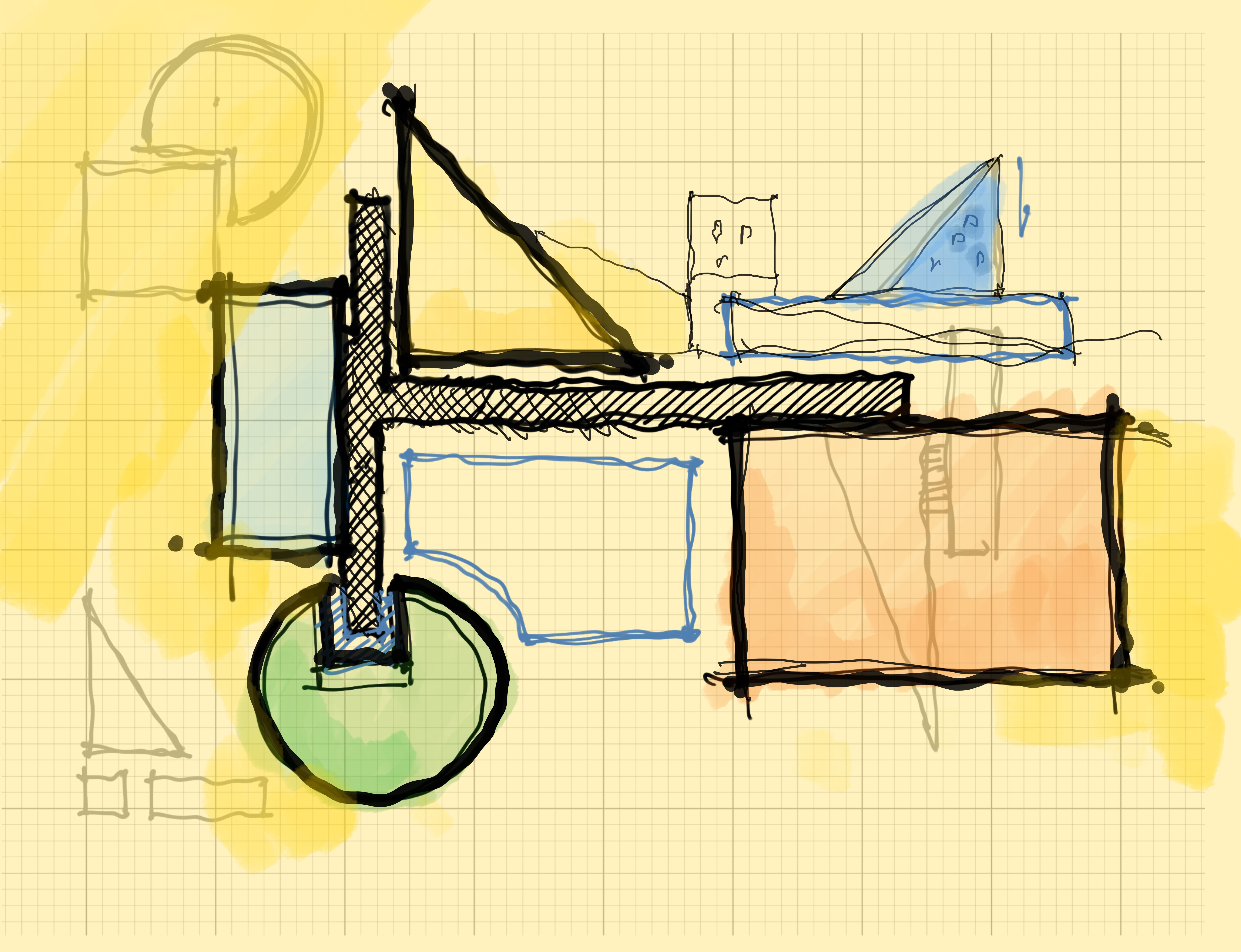
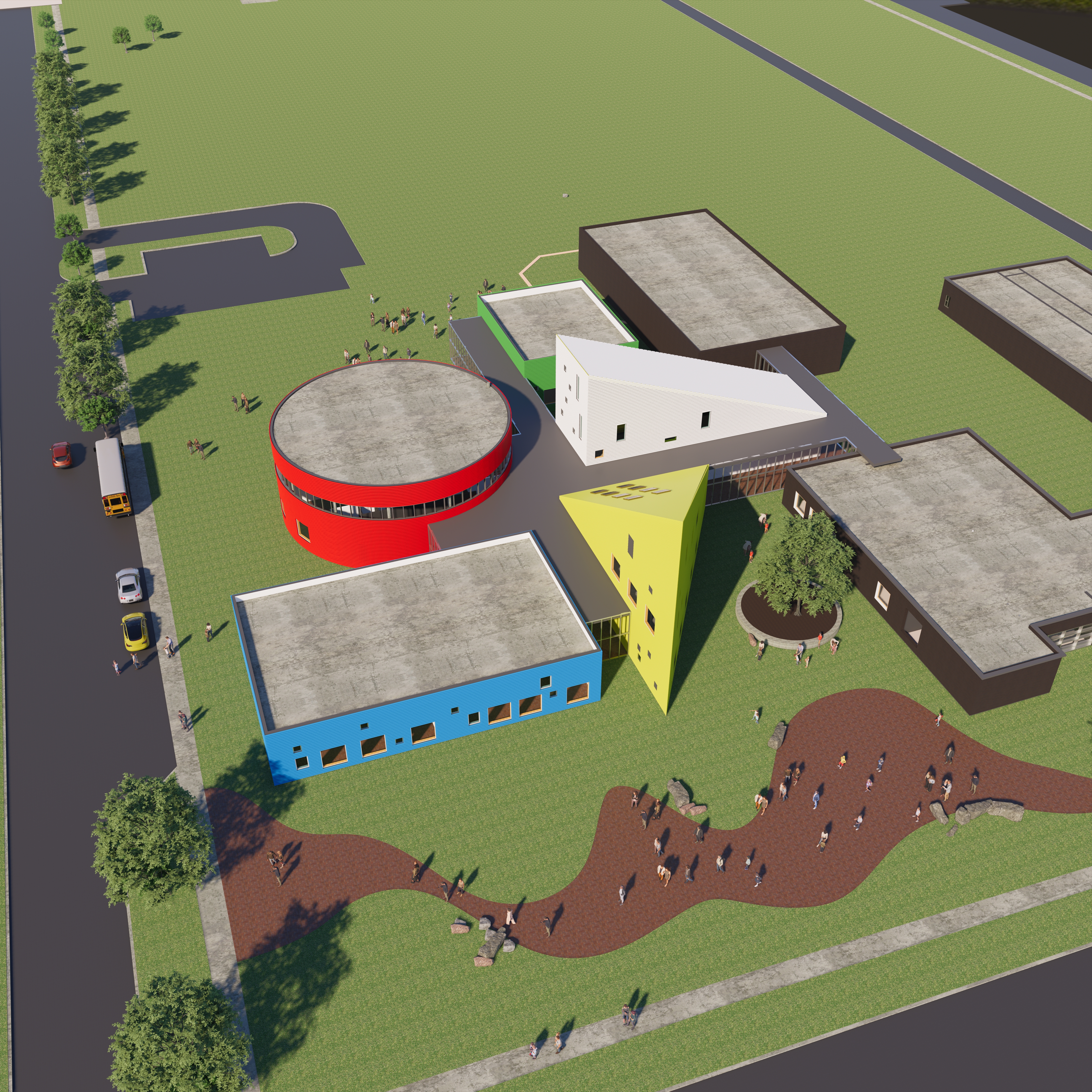
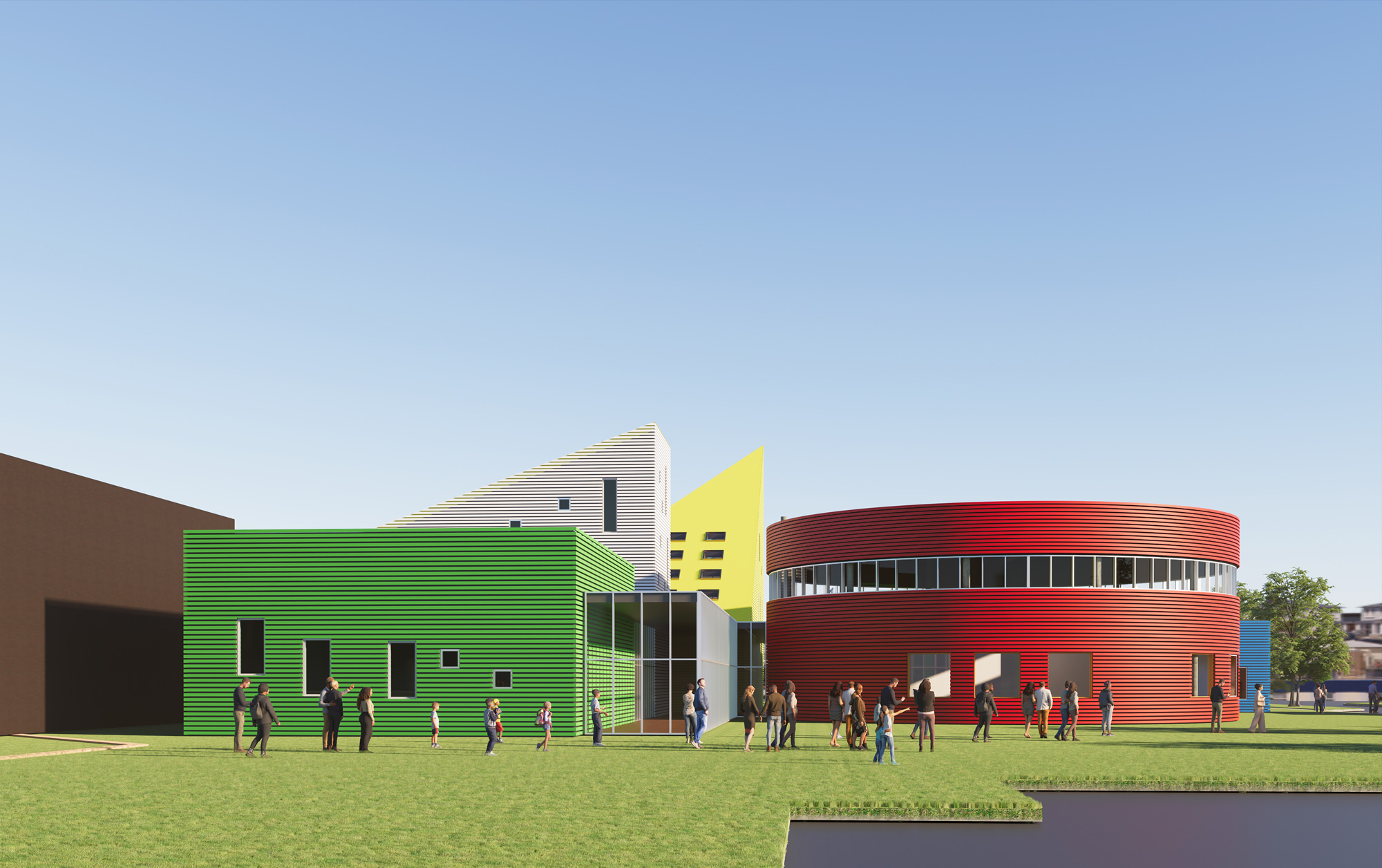
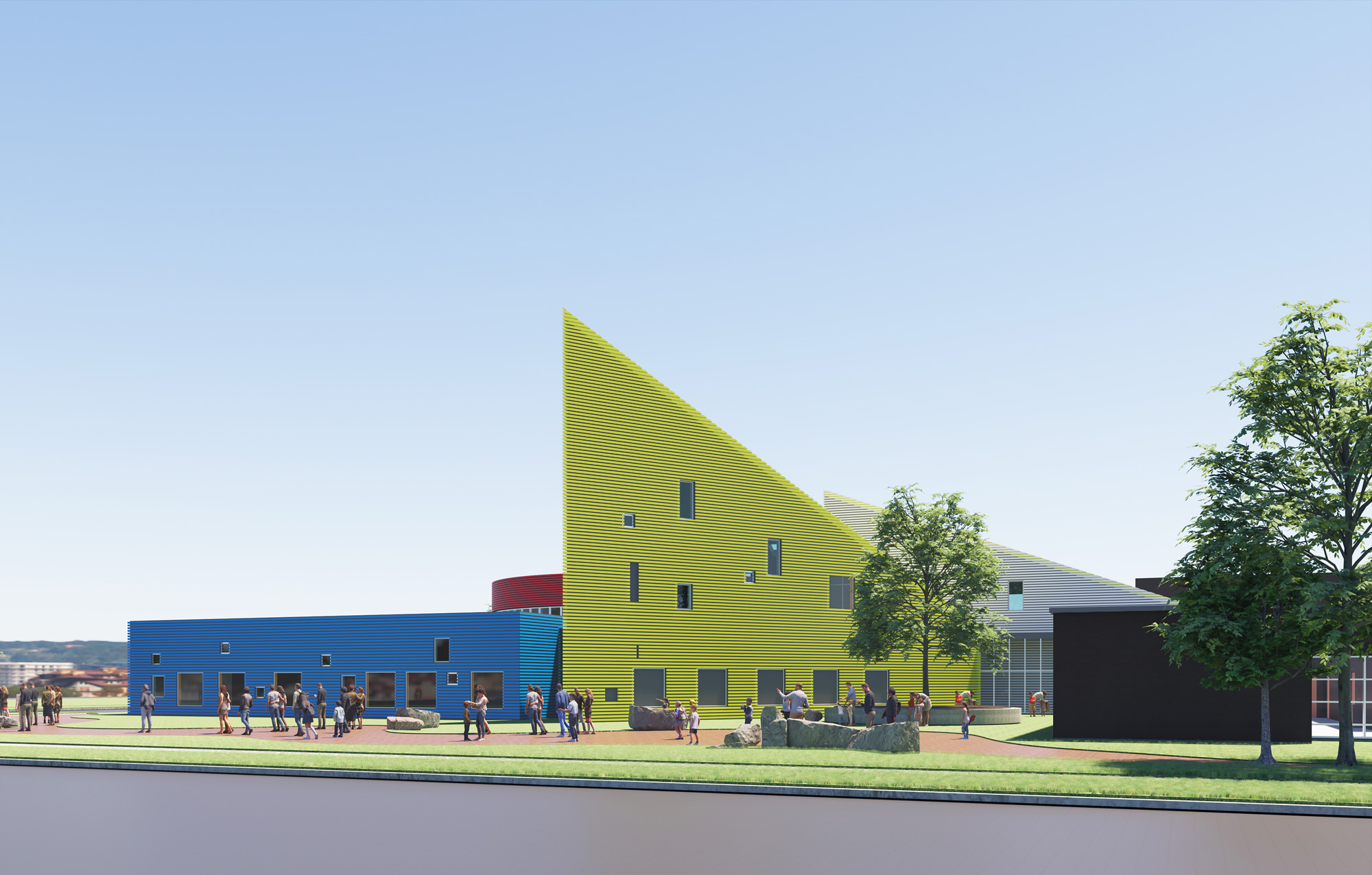
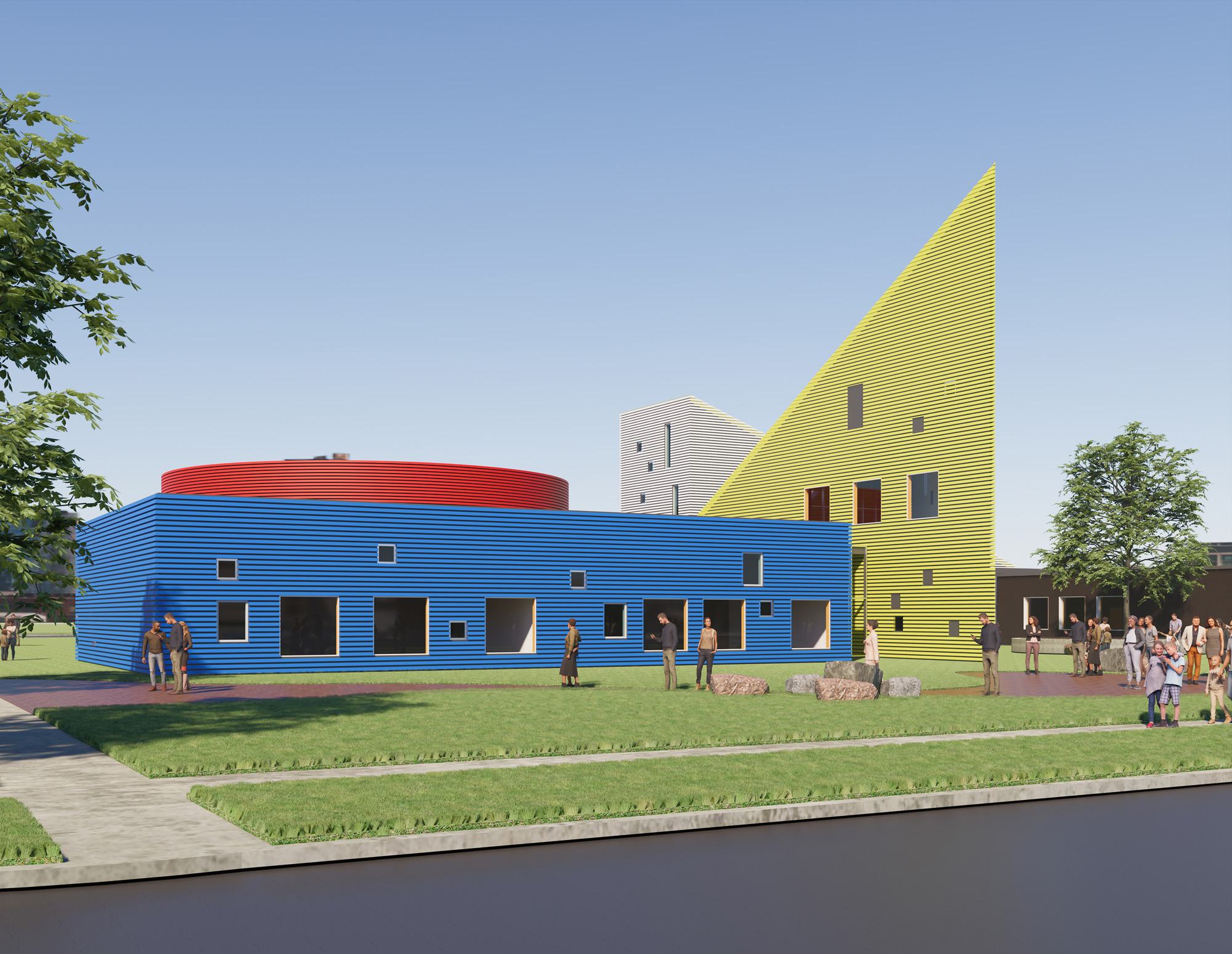
The program included five classrooms, an art room, a science room, offices, spaces for health and life skills, a gymnasium, and areas for outdoor study and collaboration. Each program element was given a distinct identity, expressed through form and colour. Primary geometric volumes—a blue cube, a red cylinder, a yellow prism—acted as legible icons, orienting students and reinforcing the idea that the building itself participates in teaching.